I had no clue of the barakah effects... Until now
Most personal growth frameworks answer how to do more, but not what any of it is actually for. One faith-rooted concept quietly reframes the whole question.
I'm not a fan of personal growth books.
Funny, right? Working at Mindvalley, I'm at the epicenter of personal growth. I study it, research it, write about it, read about it (I'm even one of the pro-readers for the Mindvalley Book Club)... and yet, I often feel like it's the same thing, repackaged for the newer generation.
I think the reason is because what personal growth doesn't answer for me is, what happens to us when we die?
Granted, focusing on bettering ourselves mind, body, and soul is for this life. But when I stop to think about it, what is it for? Longevity, for what? Biohacking, for what? Productivity, for what? And so on and so forth.
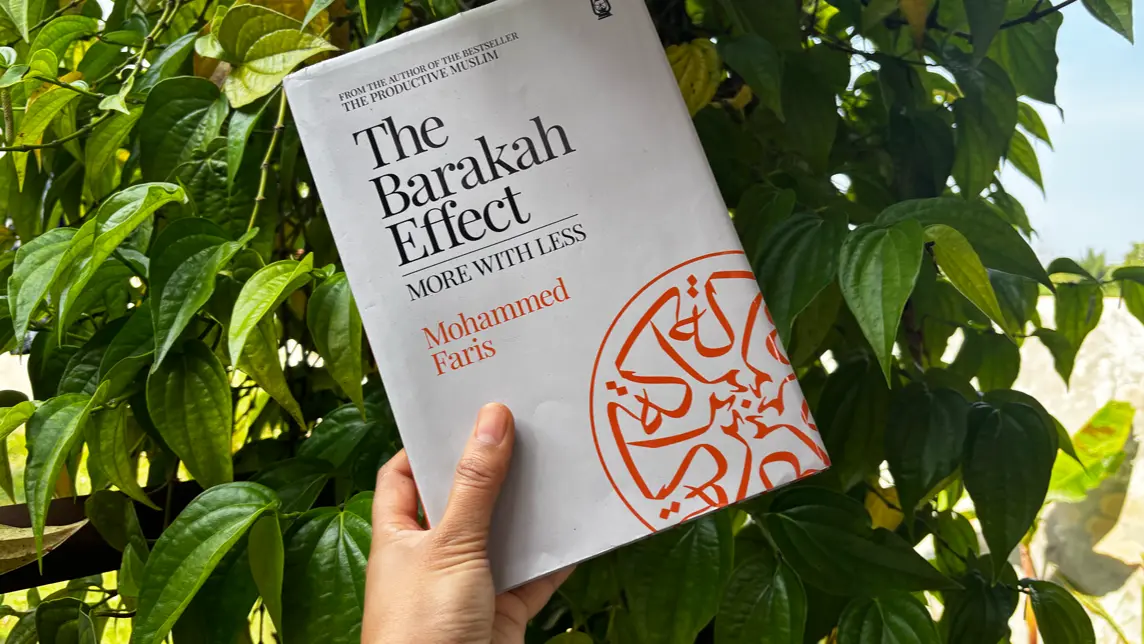
I've been struggling for a while now with this tug-of-war between “Why do I feel this way?” and “What is this all"—waving my arms around at everything around me—"actually for?" But it was only after I read Mohammed A. Faris's The Barakah Effect that I started getting it.
Disclaimer: This isn’t a religious pitch or a takedown of personal growth. It’s simply how one faith-rooted framework helped me rethink meaning, effort, and purpose.
What is Barakah?
Muslims understand there's power in Barakah. There's even the du'a (supplication), "Barakah Allah feek," as a way of, as Mr. Faris explains, "expressing our desire for Allah to infuse Barakah in that person."
"Barakah is often translated as blessing," he adds. "Yet, the term fails to encapsulate the entirety of its profound meaning."
The fact of the matter is, not all of us truly grasp what that blessing actually does. Perhaps it’s because Barakah shows up when time, effort, or resources carry more impact than their size would suggest.
For instance, you finish a workday and don’t feel hollowed out. Your tasks moved forward, your mind stayed clear, and you didn’t collapse the second you shut your laptop. That sense of steadiness is often how Barakah makes itself known.
This points to the importance of living in alignment. Making choices and setting goals that reflect what actually matters to us, who we are, and what we’re aiming toward.
Research shows that when we act in ways that match our values and sense of purpose, we feel better, stay more motivated, and recover more easily from stress. Not only that, but experts found that people who pursue goals that genuinely matter to them report greater life satisfaction and are more likely to keep going without burning out.
And yet, this isn't how most of us are taught to live or work. We're rewarded for output, speed, and visibility. Meaning and alignment come later, if at all.
The Barakah culture vs. the hustle culture
One of the main things I really respected about The Barakah Effect is its comparison between the Barakah culture and the hustle culture.
Growing up, I was taught both, but I was never taught how to differentiate them. They were so intertwined that it got harder and harder to tell where ambition ended and self-worth began.
But Mr. Faris had a great approach to understanding one versus the other.
The hustle culture
“I’ll sleep when I die.” That’s the creed many of us grew up with in the 90s. The go-go attitude where time is money, money doesn’t grow on trees, and weakness is something you eat for breakfast.
You've got the wolves of Wall Street, the rise-and-grind crowd, and the pressure to turn every spare moment into something productive. Even good guy Jay Leno had a side hustle.
Ah, the hustle culture. You love to hate it, and hate to love it. But all it did was turn productivity into a measure of worth.
A literature review on the influence of hustle culture shows that its workaholic norms encourage us to push past our own limits and well-being. And, based on what research has shown, it doesn’t necessarily improve productivity. What's more, one study found that workaholism is linked to a higher risk of depression.
"Hustle Culture revolves around serving oneself, one's ego, or what the Islamic tradition refers to as the nafs," Mr. Faris points out. That includes things like personal success, financial freedom, and "leaving a legacy," just to name a few.
"When your life revolves solely around your ego," he adds, "you'll find yourself on a rollercoaster of inconsistency — some days are good, while others are not — all dictated by your mood and the state of your nafs."
And what's happening is that we're being taught to slow down, meditate, attend a retreat, downsize our homes, and embrace minimalism. The thing is, according to Mr. Faris, "these solutions, although helpful, only address the symptoms rather than the root cause."
The Barakah culture
Now, the Barakah culture addresses the root by shifting the center away from ego and toward intention, values, and accountability beyond the self.
Work still matters; effort still matters. The difference shows up in why actions are taken and what they’re meant to serve. In short, it's all about the intentions behind our actions.
An example of this is donating, even when your finances feel tight. You do it because it aligns with what you believe matters, not because you want to be seen as generous or to feel morally superior. You don't post it on your socials, nor do you brag about it to your community. And even when there’s no guarantee of return, the act itself feels fulfilling.
"Barakah focused individuals acknowledge that Allah is ultimately in charge and that our hard work is never waste," says Mr. Faris, "as long as our intentions are pure and we sincerely put our best efforts forward, regardless of the material results we achieve."
This sounds nice, I thought. But the world doesn't work this way. Bills still need paying, performance still gets measured, and whether I get hired, promoted, or paid still affects my life and that of my family.
Mr. Faris doesn’t deny any of that. He isn’t asking us to opt out of effort or ambition. He’s pointing to something subtler—that when effort isn’t driven by panic or the need to prove ourselves, work stops feeling like a constant referendum on our worth.
And that comes down to a simple idea Mr. Faris returns to over and over in his book: “Barakah is more with less.”
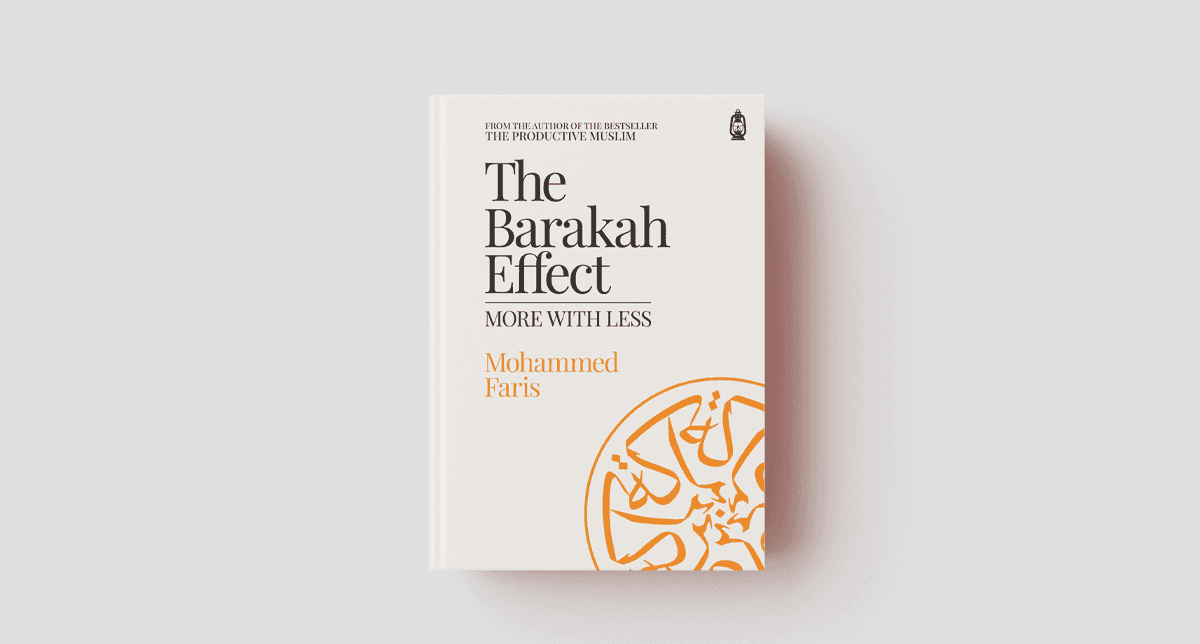
Buy the book 👇🏼 (This is not an affiliate link. I won’t receive anything if you buy it.)
—
This article was written with a little help from AI.
More Reads
Still here? Good. There's more.

I had no clue of the barakah effects... Until now
Most personal growth frameworks answer how to do more, but not what any of it is actually for. One faith-rooted concept quietly reframes the whole question.
I'm not a fan of personal growth books.
Funny, right? Working at Mindvalley, I'm at the epicenter of personal growth. I study it, research it, write about it, read about it (I'm even one of the pro-readers for the Mindvalley Book Club)... and yet, I often feel like it's the same thing, repackaged for the newer generation.
I think the reason is because what personal growth doesn't answer for me is, what happens to us when we die?
Granted, focusing on bettering ourselves mind, body, and soul is for this life. But when I stop to think about it, what is it for? Longevity, for what? Biohacking, for what? Productivity, for what? And so on and so forth.
I've been struggling for a while now with this tug-of-war between “Why do I feel this way?” and “What is this all"—waving my arms around at everything around me—"actually for?" But it was only after I read Mohammed A. Faris's The Barakah Effect that I started getting it.
Disclaimer: This isn’t a religious pitch or a takedown of personal growth. It’s simply how one faith-rooted framework helped me rethink meaning, effort, and purpose.
What is Barakah?
Muslims understand there's power in Barakah. There's even the du'a (supplication), "Barakah Allah feek," as a way of, as Mr. Faris explains, "expressing our desire for Allah to infuse Barakah in that person."
"Barakah is often translated as blessing," he adds. "Yet, the term fails to encapsulate the entirety of its profound meaning."
The fact of the matter is, not all of us truly grasp what that blessing actually does. Perhaps it’s because Barakah shows up when time, effort, or resources carry more impact than their size would suggest.
For instance, you finish a workday and don’t feel hollowed out. Your tasks moved forward, your mind stayed clear, and you didn’t collapse the second you shut your laptop. That sense of steadiness is often how Barakah makes itself known.
This points to the importance of living in alignment. Making choices and setting goals that reflect what actually matters to us, who we are, and what we’re aiming toward.
Research shows that when we act in ways that match our values and sense of purpose, we feel better, stay more motivated, and recover more easily from stress. Not only that, but experts found that people who pursue goals that genuinely matter to them report greater life satisfaction and are more likely to keep going without burning out.
And yet, this isn't how most of us are taught to live or work. We're rewarded for output, speed, and visibility. Meaning and alignment come later, if at all.
The Barakah culture vs. the hustle culture
One of the main things I really respected about The Barakah Effect is its comparison between the Barakah culture and the hustle culture.
Growing up, I was taught both, but I was never taught how to differentiate them. They were so intertwined that it got harder and harder to tell where ambition ended and self-worth began.
But Mr. Faris had a great approach to understanding one versus the other.
The hustle culture
“I’ll sleep when I die.” That’s the creed many of us grew up with in the 90s. The go-go attitude where time is money, money doesn’t grow on trees, and weakness is something you eat for breakfast.
You've got the wolves of Wall Street, the rise-and-grind crowd, and the pressure to turn every spare moment into something productive. Even good guy Jay Leno had a side hustle.
Ah, the hustle culture. You love to hate it, and hate to love it. But all it did was turn productivity into a measure of worth.
A literature review on the influence of hustle culture shows that its workaholic norms encourage us to push past our own limits and well-being. And, based on what research has shown, it doesn’t necessarily improve productivity. What's more, one study found that workaholism is linked to a higher risk of depression.
"Hustle Culture revolves around serving oneself, one's ego, or what the Islamic tradition refers to as the nafs," Mr. Faris points out. That includes things like personal success, financial freedom, and "leaving a legacy," just to name a few.
"When your life revolves solely around your ego," he adds, "you'll find yourself on a rollercoaster of inconsistency — some days are good, while others are not — all dictated by your mood and the state of your nafs."
And what's happening is that we're being taught to slow down, meditate, attend a retreat, downsize our homes, and embrace minimalism. The thing is, according to Mr. Faris, "these solutions, although helpful, only address the symptoms rather than the root cause."
The Barakah culture
Now, the Barakah culture addresses the root by shifting the center away from ego and toward intention, values, and accountability beyond the self.
Work still matters; effort still matters. The difference shows up in why actions are taken and what they’re meant to serve. In short, it's all about the intentions behind our actions.
An example of this is donating, even when your finances feel tight. You do it because it aligns with what you believe matters, not because you want to be seen as generous or to feel morally superior. You don't post it on your socials, nor do you brag about it to your community. And even when there’s no guarantee of return, the act itself feels fulfilling.
"Barakah focused individuals acknowledge that Allah is ultimately in charge and that our hard work is never waste," says Mr. Faris, "as long as our intentions are pure and we sincerely put our best efforts forward, regardless of the material results we achieve."
This sounds nice, I thought. But the world doesn't work this way. Bills still need paying, performance still gets measured, and whether I get hired, promoted, or paid still affects my life and that of my family.
Mr. Faris doesn’t deny any of that. He isn’t asking us to opt out of effort or ambition. He’s pointing to something subtler—that when effort isn’t driven by panic or the need to prove ourselves, work stops feeling like a constant referendum on our worth.
And that comes down to a simple idea Mr. Faris returns to over and over in his book: “Barakah is more with less.”
Buy the book 👇🏼 (This is not an affiliate link. I won’t receive anything if you buy it.)
—
This article was written with a little help from AI.
More Reads
Still here? Good. There's more.
I had no clue of the barakah effects... Until now
Most personal growth frameworks answer how to do more, but not what any of it is actually for. One faith-rooted concept quietly reframes the whole question.
I'm not a fan of personal growth books.
Funny, right? Working at Mindvalley, I'm at the epicenter of personal growth. I study it, research it, write about it, read about it (I'm even one of the pro-readers for the Mindvalley Book Club)... and yet, I often feel like it's the same thing, repackaged for the newer generation.
I think the reason is because what personal growth doesn't answer for me is, what happens to us when we die?
Granted, focusing on bettering ourselves mind, body, and soul is for this life. But when I stop to think about it, what is it for? Longevity, for what? Biohacking, for what? Productivity, for what? And so on and so forth.
I've been struggling for a while now with this tug-of-war between “Why do I feel this way?” and “What is this all"—waving my arms around at everything around me—"actually for?" But it was only after I read Mohammed A. Faris's The Barakah Effect that I started getting it.
Disclaimer: This isn’t a religious pitch or a takedown of personal growth. It’s simply how one faith-rooted framework helped me rethink meaning, effort, and purpose.
What is Barakah?
Muslims understand there's power in Barakah. There's even the du'a (supplication), "Barakah Allah feek," as a way of, as Mr. Faris explains, "expressing our desire for Allah to infuse Barakah in that person."
"Barakah is often translated as blessing," he adds. "Yet, the term fails to encapsulate the entirety of its profound meaning."
The fact of the matter is, not all of us truly grasp what that blessing actually does. Perhaps it’s because Barakah shows up when time, effort, or resources carry more impact than their size would suggest.
For instance, you finish a workday and don’t feel hollowed out. Your tasks moved forward, your mind stayed clear, and you didn’t collapse the second you shut your laptop. That sense of steadiness is often how Barakah makes itself known.
This points to the importance of living in alignment. Making choices and setting goals that reflect what actually matters to us, who we are, and what we’re aiming toward.
Research shows that when we act in ways that match our values and sense of purpose, we feel better, stay more motivated, and recover more easily from stress. Not only that, but experts found that people who pursue goals that genuinely matter to them report greater life satisfaction and are more likely to keep going without burning out.
And yet, this isn't how most of us are taught to live or work. We're rewarded for output, speed, and visibility. Meaning and alignment come later, if at all.
The Barakah culture vs. the hustle culture
One of the main things I really respected about The Barakah Effect is its comparison between the Barakah culture and the hustle culture.
Growing up, I was taught both, but I was never taught how to differentiate them. They were so intertwined that it got harder and harder to tell where ambition ended and self-worth began.
But Mr. Faris had a great approach to understanding one versus the other.
The hustle culture
“I’ll sleep when I die.” That’s the creed many of us grew up with in the 90s. The go-go attitude where time is money, money doesn’t grow on trees, and weakness is something you eat for breakfast.
You've got the wolves of Wall Street, the rise-and-grind crowd, and the pressure to turn every spare moment into something productive. Even good guy Jay Leno had a side hustle.
Ah, the hustle culture. You love to hate it, and hate to love it. But all it did was turn productivity into a measure of worth.
A literature review on the influence of hustle culture shows that its workaholic norms encourage us to push past our own limits and well-being. And, based on what research has shown, it doesn’t necessarily improve productivity. What's more, one study found that workaholism is linked to a higher risk of depression.
"Hustle Culture revolves around serving oneself, one's ego, or what the Islamic tradition refers to as the nafs," Mr. Faris points out. That includes things like personal success, financial freedom, and "leaving a legacy," just to name a few.
"When your life revolves solely around your ego," he adds, "you'll find yourself on a rollercoaster of inconsistency — some days are good, while others are not — all dictated by your mood and the state of your nafs."
And what's happening is that we're being taught to slow down, meditate, attend a retreat, downsize our homes, and embrace minimalism. The thing is, according to Mr. Faris, "these solutions, although helpful, only address the symptoms rather than the root cause."
The Barakah culture
Now, the Barakah culture addresses the root by shifting the center away from ego and toward intention, values, and accountability beyond the self.
Work still matters; effort still matters. The difference shows up in why actions are taken and what they’re meant to serve. In short, it's all about the intentions behind our actions.
An example of this is donating, even when your finances feel tight. You do it because it aligns with what you believe matters, not because you want to be seen as generous or to feel morally superior. You don't post it on your socials, nor do you brag about it to your community. And even when there’s no guarantee of return, the act itself feels fulfilling.
"Barakah focused individuals acknowledge that Allah is ultimately in charge and that our hard work is never waste," says Mr. Faris, "as long as our intentions are pure and we sincerely put our best efforts forward, regardless of the material results we achieve."
This sounds nice, I thought. But the world doesn't work this way. Bills still need paying, performance still gets measured, and whether I get hired, promoted, or paid still affects my life and that of my family.
Mr. Faris doesn’t deny any of that. He isn’t asking us to opt out of effort or ambition. He’s pointing to something subtler—that when effort isn’t driven by panic or the need to prove ourselves, work stops feeling like a constant referendum on our worth.
And that comes down to a simple idea Mr. Faris returns to over and over in his book: “Barakah is more with less.”
Buy the book 👇🏼 (This is not an affiliate link. I won’t receive anything if you buy it.)
—
This article was written with a little help from AI.
More Reads
Still here? Good. There's more.