
Emotions—one advantage you have over AI
AI can write your copy in seconds, but it can't make anyone care. That gap between technically correct and emotionally resonant is where most writing falls flat.
"Unlock your potential."
"Streamline your workflow."
"Take your business to the next level."
It's likely you've read these sentences (or something similar) a thousand times this week. But what do they even mean? Did any of them make you care?
This is what happens when everyone hands their copy to AI, dusts off their hands, and expects results.
Sure, the words sound great and, linguistically, correct. But they're missing one essential thing: your emotions.
The problem with modern copy
Words like "streamline," "empower," and "optimize" are considered power. Sure, they're great and all, but, as most seasoned copywriters know, they don't say much without context. All they're doing is all the talking, but none of the feeling.
One e-commerce brand, POWERUP ® Toys, knows this well. They sell devices that turn paper airplanes into remote-controlled flying machines. Their problem was that they were driving traffic to their website through paid ads and organic search. And while people were showing up, they weren't buying.
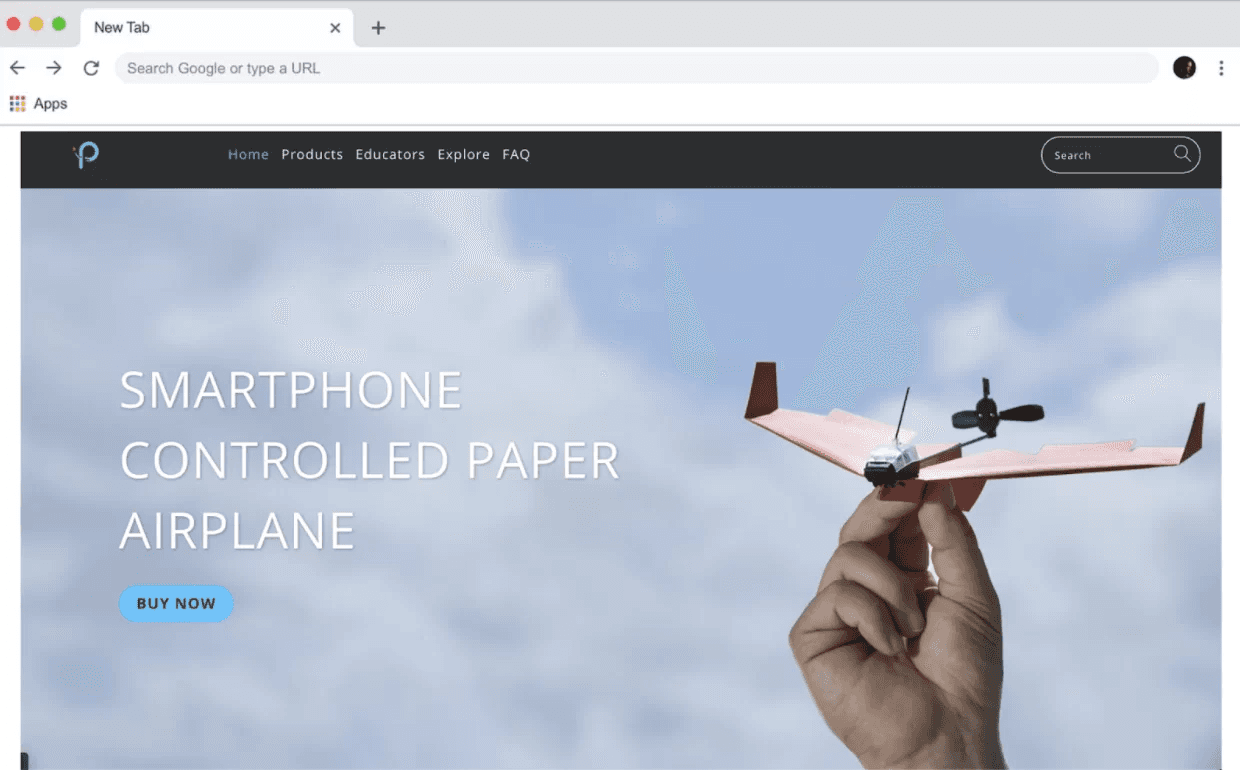
The problem was that their landing page wasn't speaking to anyone specifically. It read, "Smartphone controlled paper airplane."
Technically accurate. It described the product but didn't connect with why anyone would want it.
(Image from GetUplift)
According to an article on GetUplift, when they interviewed their actual customers, no one mentioned smartphone controls. They said things like "brings me back to my childhood flying paper airplanes in the classroom" and "we spent hours and days trying to put it together, it was brilliant."
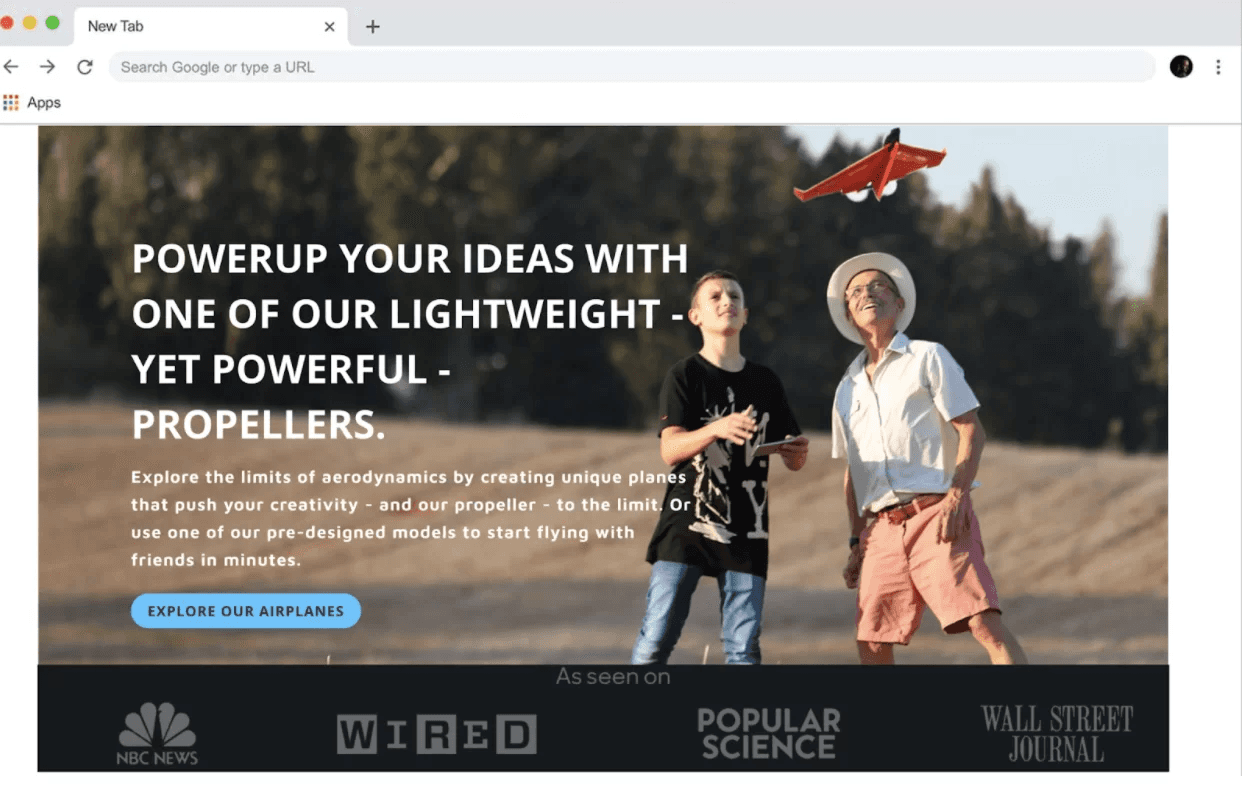
So they rewrote everything—the homepage, the product pages, the emails. All use the language and emotions their customers actually expressed. Instead of "smartphone controlled paper airplane," the new copy invited people to "push your creativity" and "start flying with friends in minutes."
The product stayed the same. The thing that changed was the words. And sales? They went up 95%.
(Image from GetUplift)
So why aren't more people writing like this?
In his book, How Customers Think: Essential Insights into the Mind of the Market, Harvard professor Gerald Zaltman estimates that 95% of purchase decisions happen subconsciously, driven more by emotion than logic.
Remember the movie, The Wolf of Wall Street? Where Jordan Belfort (played by Leonardo DiCaprio) goes to an audience member at a workshop and says, "Sell me this pen"?
"It's an amazing pen," says one guy.
"It's a nice pen," says another.
I don't know about you, but if I got those replies, my initial reaction would be, "No sh*t, Sherlock."
So what would a good answer to "sell me this pen" sound like?
If you've watched the movie, you know the secret. Yet, most copy today is along the lines of "this is an amazing pen."
Why is this happening?
It's easy to blame AI. But the thing is, writers were being trained to write for algorithms long before ChatGPT showed up.
Based on BrightEdge research, 53.3% of all website traffic comes from organic search. So, when more than half your traffic depends on search engines, of course, keywords and search intent take priority.
Search optimization taught us to write for keywords and search intent. And newer optimization strategies taught us to structure content so AI systems can cite it.
Dasha Kuprienko, an SEO strategist, recently highlighted this exact topic on her LinkedIn.
In a recent Claude workshop she conducted, a participant asked why her copy-and-paste-from-AI posts looked exactly the same as her competitors'. Dasha's reply? "Because literally nothing sets it apart."
Her point is, just because AI is readily available to all of us, that doesn't mean it makes you a storyteller...any more than owning a guitar makes you a musician.
Now, what a 2025 Ahrefs study found is that 74% of new web pages contain AI-generated content. And according to Bynder's research, 26% of consumers say it feels impersonal.
The sad fact of the matter is, there's an overreliance on AI. Writing nowadays are optimized for machines, not humans.
As an editor, I, of course, love seeing copy that are polish. That's the great thing about using AI. (Granted, it uses em dashes and contrasts way too much for my liking, but it's the equivalent of using the beauty filter on your phone.)
But the problem is, there's not enough human effort to QA any given copy and ask, "Why should people care?"
Use your emotions
AI can research. It can structure, and it can give you a first draft in seconds. Awesome. Wow.
But, if you haven't yet noticed, what it doesn't do great in is emotions. It can't trigger your pain point, nor your pleasure point, because, simply, it doesn't have emotions.
As with the PowerUp Toys case study, there's a massive difference when your audience reads "Track your mood daily, build better habits" vs. "You don't have to feel alone on your bad days."
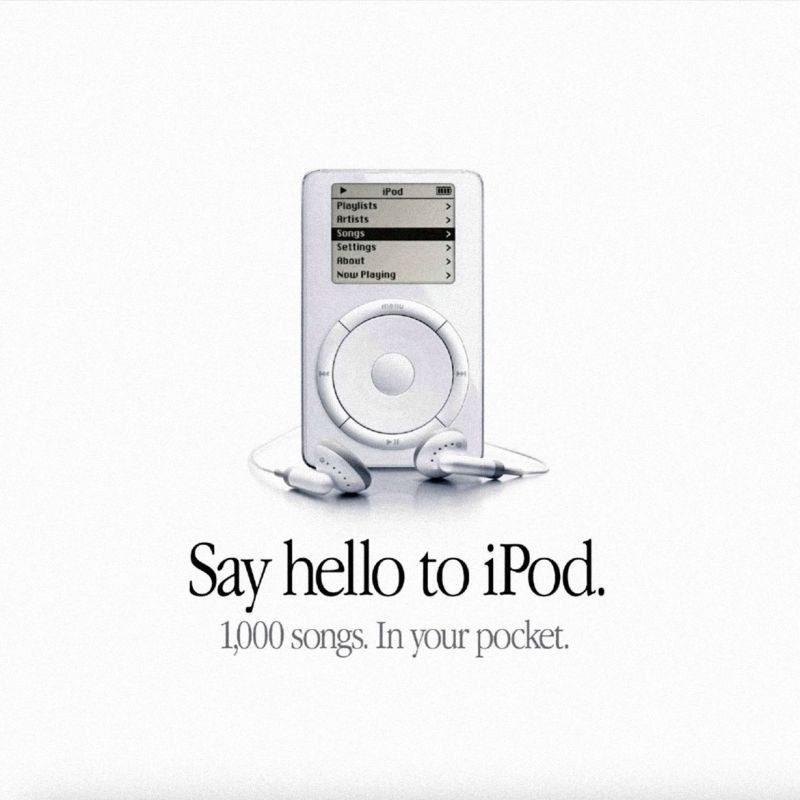
Apple, too, did this well with their iPod ad. Do you remember it? "1,000 songs. In your pocket." It was about the human experience, not the technical specs of this machine.
With AI being part of everyone's workflow now, it's about the technical, not the emotional.
The thing is, a 2025 study published in Frontiers in Psychology found that people don't care so much for creative work when they're told it was generated by AI rather than a human. Even when the output is identical. And there were steep declines in authenticity and moral respect when people saw attribution to ChatGPT.
Not only that, but studies on ScienceDirect suggest that AI copy often lacks "pragmatic competence." That means it says the right words, but it fails to understand the social context of human pain.
Many experts out there, no matter what industry, seem to agree:
In his latest LinkedIn post, Datuk Jake Abdullah, a veteran in the media and broadcast industry, points out, "People don’t buy products. They buy how you make them feel."
And in an episode of It's No Fluke, Farra Kober, the VP of StoryWorks Americas, says the goal is no longer "going viral." The metric that matters now is emotions (and, fun fact, feeling can be tracked and tied to ROI).
While it's important to get visibility by optimizing for machines, it's just as (if not more) important to connect with your audience at a much deeper level than any AI and algorithm can ever churn out.
Thoughts?
—
This article was written with a little help from AI (but not written by it).
More Reads
Still here? Good. There's more.
Emotions—one advantage you have over AI
AI can write your copy in seconds, but it can't make anyone care. That gap between technically correct and emotionally resonant is where most writing falls flat.
"Unlock your potential."
"Streamline your workflow."
"Take your business to the next level."
It's likely you've read these sentences (or something similar) a thousand times this week. But what do they even mean? Did any of them make you care?
This is what happens when everyone hands their copy to AI, dusts off their hands, and expects results.
Sure, the words sound great and, linguistically, correct. But they're missing one essential thing: your emotions.
The problem with modern copy
Words like "streamline," "empower," and "optimize" are considered power. Sure, they're great and all, but, as most seasoned copywriters know, they don't say much without context. All they're doing is all the talking, but none of the feeling.
One e-commerce brand, POWERUP ® Toys, knows this well. They sell devices that turn paper airplanes into remote-controlled flying machines. Their problem was that they were driving traffic to their website through paid ads and organic search. And while people were showing up, they weren't buying.
The problem was that their landing page wasn't speaking to anyone specifically. It read, "Smartphone controlled paper airplane."
Technically accurate. It described the product but didn't connect with why anyone would want it.
(Image from GetUplift)
According to an article on GetUplift, when they interviewed their actual customers, no one mentioned smartphone controls. They said things like "brings me back to my childhood flying paper airplanes in the classroom" and "we spent hours and days trying to put it together, it was brilliant."
So they rewrote everything—the homepage, the product pages, the emails. All use the language and emotions their customers actually expressed. Instead of "smartphone controlled paper airplane," the new copy invited people to "push your creativity" and "start flying with friends in minutes."
The product stayed the same. The thing that changed was the words. And sales? They went up 95%.
(Image from GetUplift)
So why aren't more people writing like this?
In his book, How Customers Think: Essential Insights into the Mind of the Market, Harvard professor Gerald Zaltman estimates that 95% of purchase decisions happen subconsciously, driven more by emotion than logic.
Remember the movie, The Wolf of Wall Street? Where Jordan Belfort (played by Leonardo DiCaprio) goes to an audience member at a workshop and says, "Sell me this pen"?
"It's an amazing pen," says one guy.
"It's a nice pen," says another.
I don't know about you, but if I got those replies, my initial reaction would be, "No sh*t, Sherlock."
So what would a good answer to "sell me this pen" sound like?
If you've watched the movie, you know the secret. Yet, most copy today is along the lines of "this is an amazing pen."
Why is this happening?
It's easy to blame AI. But the thing is, writers were being trained to write for algorithms long before ChatGPT showed up.
Based on BrightEdge research, 53.3% of all website traffic comes from organic search. So, when more than half your traffic depends on search engines, of course, keywords and search intent take priority.
Search optimization taught us to write for keywords and search intent. And newer optimization strategies taught us to structure content so AI systems can cite it.
Dasha Kuprienko, an SEO strategist, recently highlighted this exact topic on her LinkedIn.
In a recent Claude workshop she conducted, a participant asked why her copy-and-paste-from-AI posts looked exactly the same as her competitors'. Dasha's reply? "Because literally nothing sets it apart."
Her point is, just because AI is readily available to all of us, that doesn't mean it makes you a storyteller...any more than owning a guitar makes you a musician.
Now, what a 2025 Ahrefs study found is that 74% of new web pages contain AI-generated content. And according to Bynder's research, 26% of consumers say it feels impersonal.
The sad fact of the matter is, there's an overreliance on AI. Writing nowadays are optimized for machines, not humans.
As an editor, I, of course, love seeing copy that are polish. That's the great thing about using AI. (Granted, it uses em dashes and contrasts way too much for my liking, but it's the equivalent of using the beauty filter on your phone.)
But the problem is, there's not enough human effort to QA any given copy and ask, "Why should people care?"
Use your emotions
AI can research. It can structure, and it can give you a first draft in seconds. Awesome. Wow.
But, if you haven't yet noticed, what it doesn't do great in is emotions. It can't trigger your pain point, nor your pleasure point, because, simply, it doesn't have emotions.
As with the PowerUp Toys case study, there's a massive difference when your audience reads "Track your mood daily, build better habits" vs. "You don't have to feel alone on your bad days."
Apple, too, did this well with their iPod ad. Do you remember it? "1,000 songs. In your pocket." It was about the human experience, not the technical specs of this machine.
With AI being part of everyone's workflow now, it's about the technical, not the emotional.
The thing is, a 2025 study published in Frontiers in Psychology found that people don't care so much for creative work when they're told it was generated by AI rather than a human. Even when the output is identical. And there were steep declines in authenticity and moral respect when people saw attribution to ChatGPT.
Not only that, but studies on ScienceDirect suggest that AI copy often lacks "pragmatic competence." That means it says the right words, but it fails to understand the social context of human pain.
Many experts out there, no matter what industry, seem to agree:
In his latest LinkedIn post, Datuk Jake Abdullah, a veteran in the media and broadcast industry, points out, "People don’t buy products. They buy how you make them feel."
And in an episode of It's No Fluke, Farra Kober, the VP of StoryWorks Americas, says the goal is no longer "going viral." The metric that matters now is emotions (and, fun fact, feeling can be tracked and tied to ROI).
While it's important to get visibility by optimizing for machines, it's just as (if not more) important to connect with your audience at a much deeper level than any AI and algorithm can ever churn out.
Thoughts?
—
This article was written with a little help from AI (but not written by it).
More Reads
Still here? Good. There's more.
Emotions—one advantage you have over AI
AI can write your copy in seconds, but it can't make anyone care. That gap between technically correct and emotionally resonant is where most writing falls flat.
"Unlock your potential."
"Streamline your workflow."
"Take your business to the next level."
It's likely you've read these sentences (or something similar) a thousand times this week. But what do they even mean? Did any of them make you care?
This is what happens when everyone hands their copy to AI, dusts off their hands, and expects results.
Sure, the words sound great and, linguistically, correct. But they're missing one essential thing: your emotions.
The problem with modern copy
Words like "streamline," "empower," and "optimize" are considered power. Sure, they're great and all, but, as most seasoned copywriters know, they don't say much without context. All they're doing is all the talking, but none of the feeling.
One e-commerce brand, POWERUP ® Toys, knows this well. They sell devices that turn paper airplanes into remote-controlled flying machines. Their problem was that they were driving traffic to their website through paid ads and organic search. And while people were showing up, they weren't buying.
The problem was that their landing page wasn't speaking to anyone specifically. It read, "Smartphone controlled paper airplane."
Technically accurate. It described the product but didn't connect with why anyone would want it.
(Image from GetUplift)
According to an article on GetUplift, when they interviewed their actual customers, no one mentioned smartphone controls. They said things like "brings me back to my childhood flying paper airplanes in the classroom" and "we spent hours and days trying to put it together, it was brilliant."
So they rewrote everything—the homepage, the product pages, the emails. All use the language and emotions their customers actually expressed. Instead of "smartphone controlled paper airplane," the new copy invited people to "push your creativity" and "start flying with friends in minutes."
The product stayed the same. The thing that changed was the words. And sales? They went up 95%.
(Image from GetUplift)
So why aren't more people writing like this?
In his book, How Customers Think: Essential Insights into the Mind of the Market, Harvard professor Gerald Zaltman estimates that 95% of purchase decisions happen subconsciously, driven more by emotion than logic.
Remember the movie, The Wolf of Wall Street? Where Jordan Belfort (played by Leonardo DiCaprio) goes to an audience member at a workshop and says, "Sell me this pen"?
"It's an amazing pen," says one guy.
"It's a nice pen," says another.
I don't know about you, but if I got those replies, my initial reaction would be, "No sh*t, Sherlock."
So what would a good answer to "sell me this pen" sound like?
If you've watched the movie, you know the secret. Yet, most copy today is along the lines of "this is an amazing pen."
Why is this happening?
It's easy to blame AI. But the thing is, writers were being trained to write for algorithms long before ChatGPT showed up.
Based on BrightEdge research, 53.3% of all website traffic comes from organic search. So, when more than half your traffic depends on search engines, of course, keywords and search intent take priority.
Search optimization taught us to write for keywords and search intent. And newer optimization strategies taught us to structure content so AI systems can cite it.
Dasha Kuprienko, an SEO strategist, recently highlighted this exact topic on her LinkedIn.
In a recent Claude workshop she conducted, a participant asked why her copy-and-paste-from-AI posts looked exactly the same as her competitors'. Dasha's reply? "Because literally nothing sets it apart."
Her point is, just because AI is readily available to all of us, that doesn't mean it makes you a storyteller...any more than owning a guitar makes you a musician.
Now, what a 2025 Ahrefs study found is that 74% of new web pages contain AI-generated content. And according to Bynder's research, 26% of consumers say it feels impersonal.
The sad fact of the matter is, there's an overreliance on AI. Writing nowadays are optimized for machines, not humans.
As an editor, I, of course, love seeing copy that are polish. That's the great thing about using AI. (Granted, it uses em dashes and contrasts way too much for my liking, but it's the equivalent of using the beauty filter on your phone.)
But the problem is, there's not enough human effort to QA any given copy and ask, "Why should people care?"
Use your emotions
AI can research. It can structure, and it can give you a first draft in seconds. Awesome. Wow.
But, if you haven't yet noticed, what it doesn't do great in is emotions. It can't trigger your pain point, nor your pleasure point, because, simply, it doesn't have emotions.
As with the PowerUp Toys case study, there's a massive difference when your audience reads "Track your mood daily, build better habits" vs. "You don't have to feel alone on your bad days."
Apple, too, did this well with their iPod ad. Do you remember it? "1,000 songs. In your pocket." It was about the human experience, not the technical specs of this machine.
With AI being part of everyone's workflow now, it's about the technical, not the emotional.
The thing is, a 2025 study published in Frontiers in Psychology found that people don't care so much for creative work when they're told it was generated by AI rather than a human. Even when the output is identical. And there were steep declines in authenticity and moral respect when people saw attribution to ChatGPT.
Not only that, but studies on ScienceDirect suggest that AI copy often lacks "pragmatic competence." That means it says the right words, but it fails to understand the social context of human pain.
Many experts out there, no matter what industry, seem to agree:
In his latest LinkedIn post, Datuk Jake Abdullah, a veteran in the media and broadcast industry, points out, "People don’t buy products. They buy how you make them feel."
And in an episode of It's No Fluke, Farra Kober, the VP of StoryWorks Americas, says the goal is no longer "going viral." The metric that matters now is emotions (and, fun fact, feeling can be tracked and tied to ROI).
While it's important to get visibility by optimizing for machines, it's just as (if not more) important to connect with your audience at a much deeper level than any AI and algorithm can ever churn out.
Thoughts?
—
This article was written with a little help from AI (but not written by it).
More Reads
Still here? Good. There's more.