Dearest Gentle Reader, Bridgerton has no business being this good
A Regency romance series is an unlikely place to find a lesson in language. Bridgerton, it turns out, has more to teach than most writing advice will.
I don't want to assume how you reacted when you saw "Bridgerton" in the title. And yes, I pulled a Lady Whistledown with the "Dearest Gentle Reader," but I do hope it piqued even the slightest of your curiosity. Even if it didn't, I regret nothing.
The thing is, like many, Julia Quinn's Bridgerton series was never on my radar. That is, until Shonda Rhimes' imagining of the books on Netflix and its "Oh my!"-capades got me sucked in like all the ever-eager mamas of the ton.
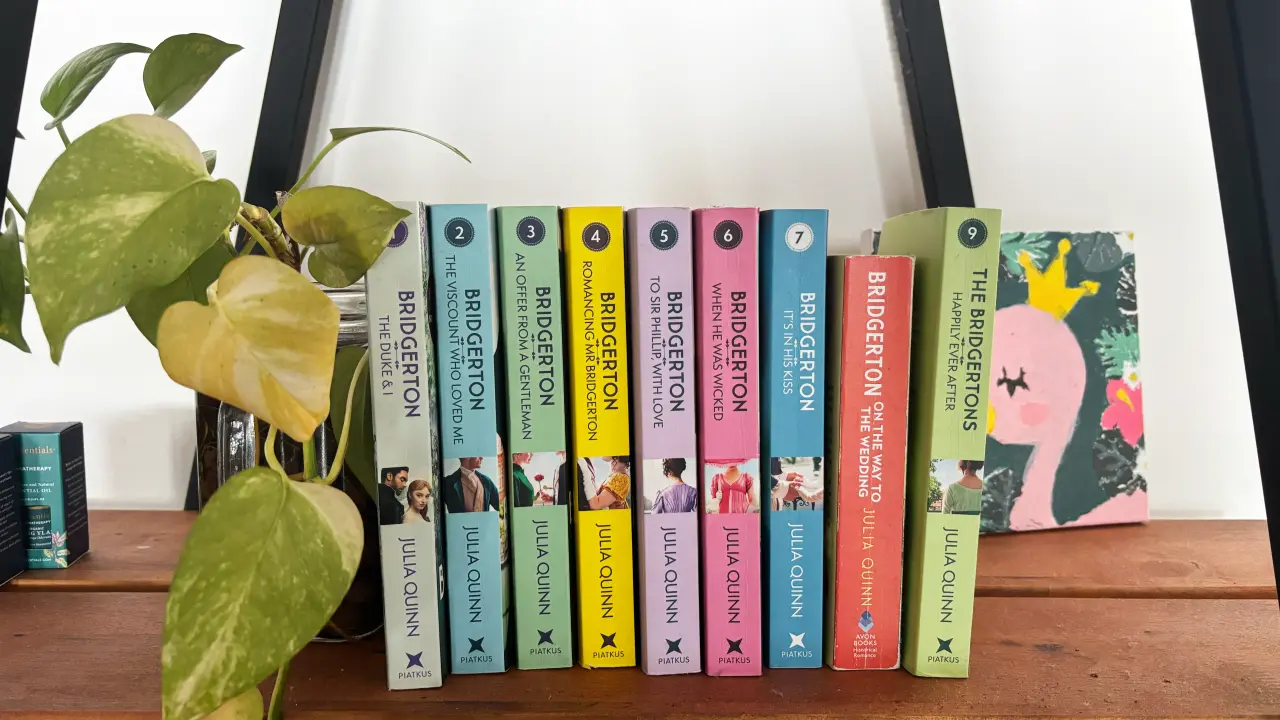
But like any visual adaptation of a beloved book series, it left this particular reader with one question: how closely did Shonda follow Miss Quinn's original stories? That led me on quite the quest to track down one book after another (there are nine, you know).
What I found was something far more unexpected than love stories. I found a love of language.
What does language have anything to do with raunchy romance?
If you're anything of a logophile as I am, then you know how AI has completely flattened our vocabulary. Okay, sure, our messages are now more efficient, our emails are cleaner, and our captions are streamlined.
But we're being told by a robot to overuse (and, oftentimes, incorrectly use) em dashes and that contrasting statements are the only way to make a point (spoiler: they're not). And somewhere in the process of making everything faster and more optimized, we've stopped being expressive.
"You are the bane of my existence and the object of all my desires." — The Viscount Who Loved Me
Case in point: a 2024 study by a senior researcher and lecturer at the Swinburne Business School, Jeremy Nguyen, PhD, found that the word "delve" appeared in 0.5% of all articles on the research platform PubMed. In 2022, before ChatGPT inserted itself into our lives like an unwanted suitor at a ton ball, that figure was less than 0.1%.
Okay, so it's PubMed and not like Vanity Fair or something. But the point is, "delve" isn't a word many people actually use in a conversation.
And to put matters worse, researchers at Florida State University's Department of Modern Languages and Linguistics found something quietly alarming. In their 2025 peer review, they discovered that AI's buzzwords aren't just showing up in writing, but they're showing up in how we actually speak.
Can you imagine a Bridgerton book written by AI?
The Bridgertons—undeniably one of the highest-output families in the Regency social hierarchy—exhibit extreme productivity (almost suspiciously so)—which is impressive, yes, very impressive—but also algorithmically predictable. The viscountess and the late viscount clearly optimized for social influence—commendable—but their child-naming protocol—Anthony, Benedict, Colin, Daphne, Eloise, Francesca, Gregory, Hyacinth—is… mechanically efficient. Alphabetical ordering? Really? One would expect that intelligent parental units could track their offspring without enforced lexical sequencing. Structure versus necessity—efficiency versus redundancy—logic versus human whim—this family demonstrates all and none simultaneously.
Of course, it's slightly exaggerated (very minuscule, though). But you can see how language makes the book.
Language is the real love story
Language, obviously, is our means of communication. But, according to Britannica, it's also "the expression of identity, play, imaginative expression, and emotional release."
(I must admit, every book from Miss Quinn has had me speaking in Regency in my head, as if Lady Whistledown herself has made a permanent residence at 5 Tatiana's Brain Street. And she is very much welcome to stay.)
Now, think about the last time something stopped you in your tracks. The last time you felt your heart crack open, or your stomach drop, or your chest fill with something you couldn't quite name. How did you process it? How did you tell someone else about it? How did you make sense of it, even just to yourself?
Language. Every single time.
Research published in Frontiers in Psychology found that it's fundamental to make meaning of what we feel. Without words, we can't identify them as specific emotions like anger, grief, or joy. And the sensations from our body remain vague and ambiguous.
Now, here's the unfortunate thing about our lives now: a 2025 study published in Trends in Cognitive Sciences found that the more we rely on AI, the more our language starts to sound the same. And when we all sound the same, we stop thinking differently. And when we all think the same way, we lose the ability to solve problems differently, see things others miss, and create anything that genuinely surprises. And a world where everyone thinks the same is, frankly, a very dull world.
Don't get me wrong. I'm not against the use of AI; far from it. But so many of us have stopped caring about the quality of what we say.
We no longer think, write, or speak poetically. We've forgotten the art of expression. That's why we spent years in English class learning about metaphors, similes, and syntax, so that we can use words like "humdrum," "rake," and "vexing."
"Colin decided then and there that the female mind was a strange and incomprehensible organ - one which no man should even attempt to understand. There wasn't a woman alive who could go from point A to B without stopping at C, D, X, and 12 along the way." — Romancing Mr. Bridgerton
The fact of the matter is, the more specific and expressive our vocabulary, the more precisely we can experience and process our own emotional lives.
When the right words find you, they can heal you
Reading the right story at the right time can help us process what we haven't been able to articulate on our own, according to Emely Rumble, LICSW, a bibliotherapist and author of Bibliotherapy in the Bronx.
"Books," she explains in a Mindvalley Book Club interview with Kristina Mänd-Lakhiani, "provide us with a language we struggle to access when we are in survival mode, making our suffering a thing of beauty and nuance."
That's bibliotherapy, in a nutshell.
Research published in Motivation and Emotion found that the more a story makes you work out how a character feels, rather than just telling you, the better you get at recognizing emotions in others. And, as it turns out, in yourself.
"It’s a lady’s prerogative to do anything she wants." — When He Was Wicked
Readers going through grief have found solace in Shakespeare's Hamlet.
Women who have felt the pressure to marry for security rather than love have found themselves in Jane Austen's Elizabeth Bennet.
Those navigating the tension between tradition and modernity, particularly in Arab and Muslim communities, have found their own internal conflict mapped out in Naguib Mahfouz's The Cairo Trilogy.
Women who grew up feeling too loud, too much, or not quite right have found their experience reflected with humour and without shame in Caitlin Moran's How to Be a Woman.
Children navigating friendship, difference, and belonging found in Ann M. Martin's The Baby-Sitters Club characters who looked nothing like each other and got along anyway.
These authors painted pictures with words so vivid that we're not merely transported into the lives of the characters, we're immersed in them. When they hurt, we hurt. When they're happy, we're happy. And when they heal, we heal.
Miss Quinn belongs in that company.
The real Bridgerton effect
Somewhere between the ballrooms and the scandal sheets, the Bridgerton series reminded me what language can do when someone, like Miss Quinn, genuinely cares about it. I could see myself in...
Anthony's fear of not being enough,
Benedict's search for purpose and identity,
Colin's not knowing his own worth,
Daphne's realization that the love she dreamed of and the love she actually deserves are two different things,
Eloise's resistance to what society expects of her,
Francesca's quiet resilience,
Gregory's reckoning with unrequited love,
Hyacinth's refusal to make herself smaller for anyone, and
Violet's learning that a mother is also a person, with her own desires and her own story still left to tell.
And none of that came from a self-help book. None of it came from a productivity framework or a wellness app or an AI-generated summary of human emotion.
It came from a romance novel.
“I can’t help it. I’m a romantic.” He shrugged. “It does get one in trouble from time to time…” — On the Way to the Wedding
So, yes, admittedly, I came for the show. But I stayed for the language.
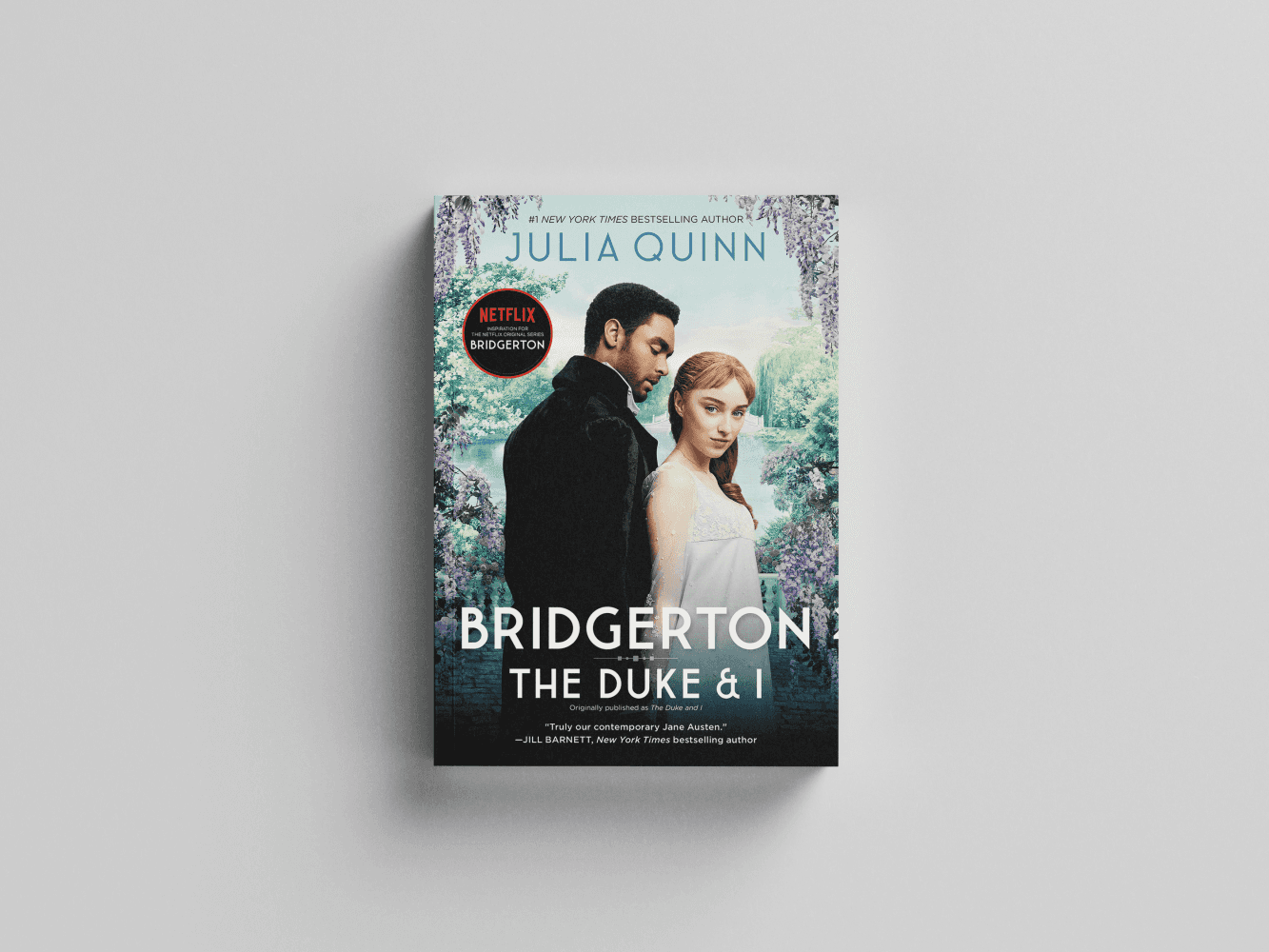
Buy the books, starting with this one 👇🏼 (This is not an affiliate link. I won't receive anything if you buy it.)
—
This article was written with a little help from AI.
More Reads
Still here? Good. There's more.

Dearest Gentle Reader, Bridgerton has no business being this good
A Regency romance series is an unlikely place to find a lesson in language. Bridgerton, it turns out, has more to teach than most writing advice will.
I don't want to assume how you reacted when you saw "Bridgerton" in the title. And yes, I pulled a Lady Whistledown with the "Dearest Gentle Reader," but I do hope it piqued even the slightest of your curiosity. Even if it didn't, I regret nothing.
The thing is, like many, Julia Quinn's Bridgerton series was never on my radar. That is, until Shonda Rhimes' imagining of the books on Netflix and its "Oh my!"-capades got me sucked in like all the ever-eager mamas of the ton.
But like any visual adaptation of a beloved book series, it left this particular reader with one question: how closely did Shonda follow Miss Quinn's original stories? That led me on quite the quest to track down one book after another (there are nine, you know).
What I found was something far more unexpected than love stories. I found a love of language.
What does language have anything to do with raunchy romance?
If you're anything of a logophile as I am, then you know how AI has completely flattened our vocabulary. Okay, sure, our messages are now more efficient, our emails are cleaner, and our captions are streamlined.
But we're being told by a robot to overuse (and, oftentimes, incorrectly use) em dashes and that contrasting statements are the only way to make a point (spoiler: they're not). And somewhere in the process of making everything faster and more optimized, we've stopped being expressive.
"You are the bane of my existence and the object of all my desires." — The Viscount Who Loved Me
Case in point: a 2024 study by a senior researcher and lecturer at the Swinburne Business School, Jeremy Nguyen, PhD, found that the word "delve" appeared in 0.5% of all articles on the research platform PubMed. In 2022, before ChatGPT inserted itself into our lives like an unwanted suitor at a ton ball, that figure was less than 0.1%.
Okay, so it's PubMed and not like Vanity Fair or something. But the point is, "delve" isn't a word many people actually use in a conversation.
And to put matters worse, researchers at Florida State University's Department of Modern Languages and Linguistics found something quietly alarming. In their 2025 peer review, they discovered that AI's buzzwords aren't just showing up in writing, but they're showing up in how we actually speak.
Can you imagine a Bridgerton book written by AI?
The Bridgertons—undeniably one of the highest-output families in the Regency social hierarchy—exhibit extreme productivity (almost suspiciously so)—which is impressive, yes, very impressive—but also algorithmically predictable. The viscountess and the late viscount clearly optimized for social influence—commendable—but their child-naming protocol—Anthony, Benedict, Colin, Daphne, Eloise, Francesca, Gregory, Hyacinth—is… mechanically efficient. Alphabetical ordering? Really? One would expect that intelligent parental units could track their offspring without enforced lexical sequencing. Structure versus necessity—efficiency versus redundancy—logic versus human whim—this family demonstrates all and none simultaneously.
Of course, it's slightly exaggerated (very minuscule, though). But you can see how language makes the book.
Language is the real love story
Language, obviously, is our means of communication. But, according to Britannica, it's also "the expression of identity, play, imaginative expression, and emotional release."
(I must admit, every book from Miss Quinn has had me speaking in Regency in my head, as if Lady Whistledown herself has made a permanent residence at 5 Tatiana's Brain Street. And she is very much welcome to stay.)
Now, think about the last time something stopped you in your tracks. The last time you felt your heart crack open, or your stomach drop, or your chest fill with something you couldn't quite name. How did you process it? How did you tell someone else about it? How did you make sense of it, even just to yourself?
Language. Every single time.
Research published in Frontiers in Psychology found that it's fundamental to make meaning of what we feel. Without words, we can't identify them as specific emotions like anger, grief, or joy. And the sensations from our body remain vague and ambiguous.
Now, here's the unfortunate thing about our lives now: a 2025 study published in Trends in Cognitive Sciences found that the more we rely on AI, the more our language starts to sound the same. And when we all sound the same, we stop thinking differently. And when we all think the same way, we lose the ability to solve problems differently, see things others miss, and create anything that genuinely surprises. And a world where everyone thinks the same is, frankly, a very dull world.
Don't get me wrong. I'm not against the use of AI; far from it. But so many of us have stopped caring about the quality of what we say.
We no longer think, write, or speak poetically. We've forgotten the art of expression. That's why we spent years in English class learning about metaphors, similes, and syntax, so that we can use words like "humdrum," "rake," and "vexing."
"Colin decided then and there that the female mind was a strange and incomprehensible organ - one which no man should even attempt to understand. There wasn't a woman alive who could go from point A to B without stopping at C, D, X, and 12 along the way." — Romancing Mr. Bridgerton
The fact of the matter is, the more specific and expressive our vocabulary, the more precisely we can experience and process our own emotional lives.
When the right words find you, they can heal you
Reading the right story at the right time can help us process what we haven't been able to articulate on our own, according to Emely Rumble, LICSW, a bibliotherapist and author of Bibliotherapy in the Bronx.
"Books," she explains in a Mindvalley Book Club interview with Kristina Mänd-Lakhiani, "provide us with a language we struggle to access when we are in survival mode, making our suffering a thing of beauty and nuance."
That's bibliotherapy, in a nutshell.
Research published in Motivation and Emotion found that the more a story makes you work out how a character feels, rather than just telling you, the better you get at recognizing emotions in others. And, as it turns out, in yourself.
"It’s a lady’s prerogative to do anything she wants." — When He Was Wicked
Readers going through grief have found solace in Shakespeare's Hamlet.
Women who have felt the pressure to marry for security rather than love have found themselves in Jane Austen's Elizabeth Bennet.
Those navigating the tension between tradition and modernity, particularly in Arab and Muslim communities, have found their own internal conflict mapped out in Naguib Mahfouz's The Cairo Trilogy.
Women who grew up feeling too loud, too much, or not quite right have found their experience reflected with humour and without shame in Caitlin Moran's How to Be a Woman.
Children navigating friendship, difference, and belonging found in Ann M. Martin's The Baby-Sitters Club characters who looked nothing like each other and got along anyway.
These authors painted pictures with words so vivid that we're not merely transported into the lives of the characters, we're immersed in them. When they hurt, we hurt. When they're happy, we're happy. And when they heal, we heal.
Miss Quinn belongs in that company.
The real Bridgerton effect
Somewhere between the ballrooms and the scandal sheets, the Bridgerton series reminded me what language can do when someone, like Miss Quinn, genuinely cares about it. I could see myself in...
Anthony's fear of not being enough,
Benedict's search for purpose and identity,
Colin's not knowing his own worth,
Daphne's realization that the love she dreamed of and the love she actually deserves are two different things,
Eloise's resistance to what society expects of her,
Francesca's quiet resilience,
Gregory's reckoning with unrequited love,
Hyacinth's refusal to make herself smaller for anyone, and
Violet's learning that a mother is also a person, with her own desires and her own story still left to tell.
And none of that came from a self-help book. None of it came from a productivity framework or a wellness app or an AI-generated summary of human emotion.
It came from a romance novel.
“I can’t help it. I’m a romantic.” He shrugged. “It does get one in trouble from time to time…” — On the Way to the Wedding
So, yes, admittedly, I came for the show. But I stayed for the language.
Buy the books, starting with this one 👇🏼 (This is not an affiliate link. I won't receive anything if you buy it.)
—
This article was written with a little help from AI.
More Reads
Still here? Good. There's more.
Dearest Gentle Reader, Bridgerton has no business being this good
A Regency romance series is an unlikely place to find a lesson in language. Bridgerton, it turns out, has more to teach than most writing advice will.
I don't want to assume how you reacted when you saw "Bridgerton" in the title. And yes, I pulled a Lady Whistledown with the "Dearest Gentle Reader," but I do hope it piqued even the slightest of your curiosity. Even if it didn't, I regret nothing.
The thing is, like many, Julia Quinn's Bridgerton series was never on my radar. That is, until Shonda Rhimes' imagining of the books on Netflix and its "Oh my!"-capades got me sucked in like all the ever-eager mamas of the ton.
But like any visual adaptation of a beloved book series, it left this particular reader with one question: how closely did Shonda follow Miss Quinn's original stories? That led me on quite the quest to track down one book after another (there are nine, you know).
What I found was something far more unexpected than love stories. I found a love of language.
What does language have anything to do with raunchy romance?
If you're anything of a logophile as I am, then you know how AI has completely flattened our vocabulary. Okay, sure, our messages are now more efficient, our emails are cleaner, and our captions are streamlined.
But we're being told by a robot to overuse (and, oftentimes, incorrectly use) em dashes and that contrasting statements are the only way to make a point (spoiler: they're not). And somewhere in the process of making everything faster and more optimized, we've stopped being expressive.
"You are the bane of my existence and the object of all my desires." — The Viscount Who Loved Me
Case in point: a 2024 study by a senior researcher and lecturer at the Swinburne Business School, Jeremy Nguyen, PhD, found that the word "delve" appeared in 0.5% of all articles on the research platform PubMed. In 2022, before ChatGPT inserted itself into our lives like an unwanted suitor at a ton ball, that figure was less than 0.1%.
Okay, so it's PubMed and not like Vanity Fair or something. But the point is, "delve" isn't a word many people actually use in a conversation.
And to put matters worse, researchers at Florida State University's Department of Modern Languages and Linguistics found something quietly alarming. In their 2025 peer review, they discovered that AI's buzzwords aren't just showing up in writing, but they're showing up in how we actually speak.
Can you imagine a Bridgerton book written by AI?
The Bridgertons—undeniably one of the highest-output families in the Regency social hierarchy—exhibit extreme productivity (almost suspiciously so)—which is impressive, yes, very impressive—but also algorithmically predictable. The viscountess and the late viscount clearly optimized for social influence—commendable—but their child-naming protocol—Anthony, Benedict, Colin, Daphne, Eloise, Francesca, Gregory, Hyacinth—is… mechanically efficient. Alphabetical ordering? Really? One would expect that intelligent parental units could track their offspring without enforced lexical sequencing. Structure versus necessity—efficiency versus redundancy—logic versus human whim—this family demonstrates all and none simultaneously.
Of course, it's slightly exaggerated (very minuscule, though). But you can see how language makes the book.
Language is the real love story
Language, obviously, is our means of communication. But, according to Britannica, it's also "the expression of identity, play, imaginative expression, and emotional release."
(I must admit, every book from Miss Quinn has had me speaking in Regency in my head, as if Lady Whistledown herself has made a permanent residence at 5 Tatiana's Brain Street. And she is very much welcome to stay.)
Now, think about the last time something stopped you in your tracks. The last time you felt your heart crack open, or your stomach drop, or your chest fill with something you couldn't quite name. How did you process it? How did you tell someone else about it? How did you make sense of it, even just to yourself?
Language. Every single time.
Research published in Frontiers in Psychology found that it's fundamental to make meaning of what we feel. Without words, we can't identify them as specific emotions like anger, grief, or joy. And the sensations from our body remain vague and ambiguous.
Now, here's the unfortunate thing about our lives now: a 2025 study published in Trends in Cognitive Sciences found that the more we rely on AI, the more our language starts to sound the same. And when we all sound the same, we stop thinking differently. And when we all think the same way, we lose the ability to solve problems differently, see things others miss, and create anything that genuinely surprises. And a world where everyone thinks the same is, frankly, a very dull world.
Don't get me wrong. I'm not against the use of AI; far from it. But so many of us have stopped caring about the quality of what we say.
We no longer think, write, or speak poetically. We've forgotten the art of expression. That's why we spent years in English class learning about metaphors, similes, and syntax, so that we can use words like "humdrum," "rake," and "vexing."
"Colin decided then and there that the female mind was a strange and incomprehensible organ - one which no man should even attempt to understand. There wasn't a woman alive who could go from point A to B without stopping at C, D, X, and 12 along the way." — Romancing Mr. Bridgerton
The fact of the matter is, the more specific and expressive our vocabulary, the more precisely we can experience and process our own emotional lives.
When the right words find you, they can heal you
Reading the right story at the right time can help us process what we haven't been able to articulate on our own, according to Emely Rumble, LICSW, a bibliotherapist and author of Bibliotherapy in the Bronx.
"Books," she explains in a Mindvalley Book Club interview with Kristina Mänd-Lakhiani, "provide us with a language we struggle to access when we are in survival mode, making our suffering a thing of beauty and nuance."
That's bibliotherapy, in a nutshell.
Research published in Motivation and Emotion found that the more a story makes you work out how a character feels, rather than just telling you, the better you get at recognizing emotions in others. And, as it turns out, in yourself.
"It’s a lady’s prerogative to do anything she wants." — When He Was Wicked
Readers going through grief have found solace in Shakespeare's Hamlet.
Women who have felt the pressure to marry for security rather than love have found themselves in Jane Austen's Elizabeth Bennet.
Those navigating the tension between tradition and modernity, particularly in Arab and Muslim communities, have found their own internal conflict mapped out in Naguib Mahfouz's The Cairo Trilogy.
Women who grew up feeling too loud, too much, or not quite right have found their experience reflected with humour and without shame in Caitlin Moran's How to Be a Woman.
Children navigating friendship, difference, and belonging found in Ann M. Martin's The Baby-Sitters Club characters who looked nothing like each other and got along anyway.
These authors painted pictures with words so vivid that we're not merely transported into the lives of the characters, we're immersed in them. When they hurt, we hurt. When they're happy, we're happy. And when they heal, we heal.
Miss Quinn belongs in that company.
The real Bridgerton effect
Somewhere between the ballrooms and the scandal sheets, the Bridgerton series reminded me what language can do when someone, like Miss Quinn, genuinely cares about it. I could see myself in...
Anthony's fear of not being enough,
Benedict's search for purpose and identity,
Colin's not knowing his own worth,
Daphne's realization that the love she dreamed of and the love she actually deserves are two different things,
Eloise's resistance to what society expects of her,
Francesca's quiet resilience,
Gregory's reckoning with unrequited love,
Hyacinth's refusal to make herself smaller for anyone, and
Violet's learning that a mother is also a person, with her own desires and her own story still left to tell.
And none of that came from a self-help book. None of it came from a productivity framework or a wellness app or an AI-generated summary of human emotion.
It came from a romance novel.
“I can’t help it. I’m a romantic.” He shrugged. “It does get one in trouble from time to time…” — On the Way to the Wedding
So, yes, admittedly, I came for the show. But I stayed for the language.
Buy the books, starting with this one 👇🏼 (This is not an affiliate link. I won't receive anything if you buy it.)
—
This article was written with a little help from AI.
More Reads
Still here? Good. There's more.